
Yu, S*., Zhang, Y., Liu, C., & Lee, I. (2022). From theory to practice: Understanding the long-term impact of an L2 writing education course on writing teachers. Language Teaching Research.
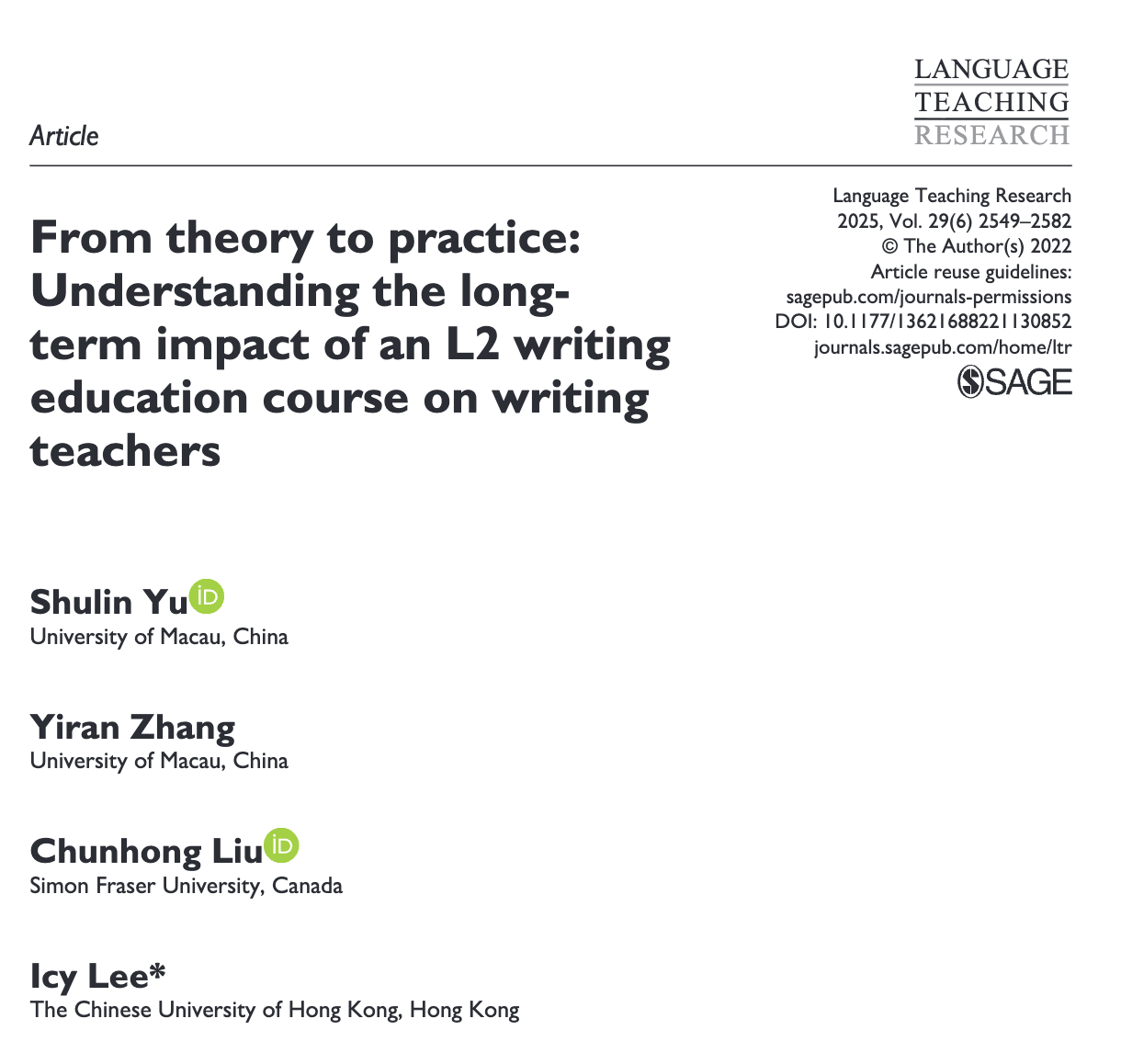
Research on second language (L2) writing tends to focus much more on student learning of writing than teachers’ teaching and learning of the teaching of writing. While a few studies have considered the influence of formal education on teachers’ L2 writing instruction, such as by examining the changes in teacher beliefs and practices across one semester (Lee, 2010), little is known about the long-term impact (e.g., 2 or 3 years) of such training on the professional development of L2 writing teachers. The present study adopted a multiple-case study approach to examine the long-term effects of a course on teaching L2 writing on five teachers of writing who taught writing in different contexts (primary school, secondary school, private language training center, and university) in the Chinese EFL context and how the teachers may apply the theoretical knowledge and recommended pedagogies presented in such a course. Drawing upon multiple sources of data, including interviews, stimulated recalls, and teaching materials, this study revealed that despite the peripheral position of writing in current L2 literacy education, training teachers to teach L2 writing can have both immediate and lasting effects on their thinking, practices, and learning as L2 writing teachers. The course enhanced the teachers’ understanding of L2 writing and writing instruction and enabled them to adopt new pedagogies and feedback practices, whereas previously they had neglected writing instruction and taught writing based on their prior learning experiences. However, the teachers’ teaching experience determined their appropriation of the new pedagogies when contextual constraints such as students’ language proficiency, limited class hours, and exam pressure hindered their adoption of the changes. The study draws attention to L2 teachers’ knowledge gaps (thinking), their teaching practices, and their learning to teach writing (learning) and elucidates the impact of educating language teachers to teach writing across various educational settings.
By |2025-12-29T12:48:12+08:00December 29, 2025|research highlight|Comments Off on Yu, S*., Zhang, Y., Liu, C., & Lee, I. (2022). From theory to practice: Understanding the long-term impact of an L2 writing education course on writing teachers. Language Teaching Research.

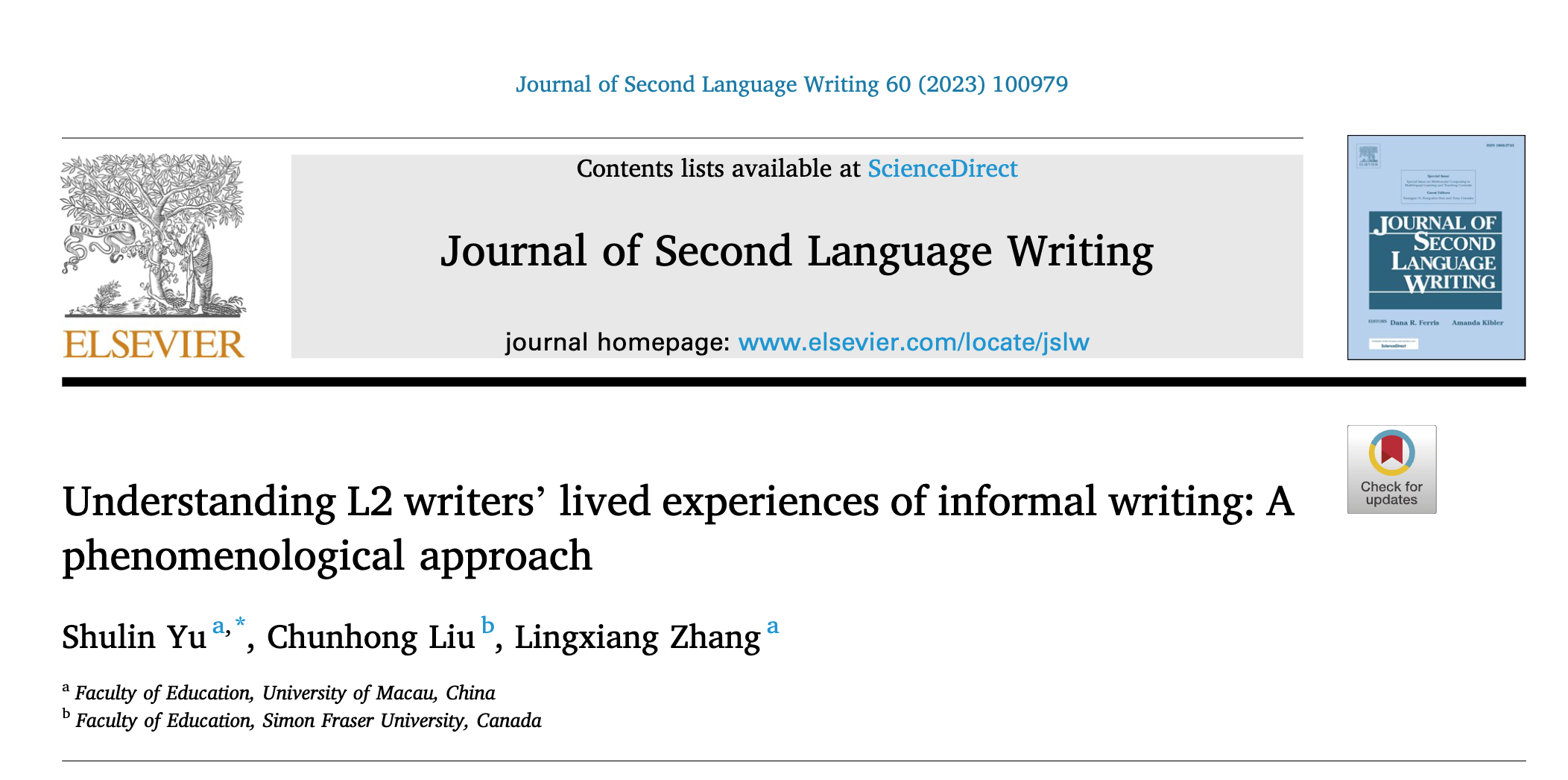
Yu, S.*, Liu, C., & Zhang, L. (2023). Understanding L2 writers’ lived experiences of informal writing: A phenomenological approach. Journal of Second Language Writing, 60, 100979.

While much attention has been directed at formal or academic writing in teaching and researching second language (L2) writing, informal writing still holds a marginal position in the current writing research, suggesting a neglect of its value as teachable in schools and meaningful for personal development. Adopting a phenomenological approach, the present study investigates L2 university student writers’ perceptions of and experience with informal writing both in and out of the classroom context. Drawing upon semi-structured individual interviews and written arti-facts, this study revealed five themes pertaining to student writers’ experiences of informal L2 writing and demonstrated its learning potential as playground, situated interaction, and learning strategy. This study has implications for L2 writing scholarship with its situated and nuanced understanding of L2 student writers’ experiences of and engagement with informal writing. It also discusses the imperative for a refined understanding of L2 informal writing instruction and curriculum design.

By |2025-12-29T12:46:39+08:00December 29, 2025|research highlight|Comments Off on Yu, S.*, Liu, C., & Zhang, L. (2023). Understanding L2 writers’ lived experiences of informal writing: A phenomenological approach. Journal of Second Language Writing, 60, 100979.

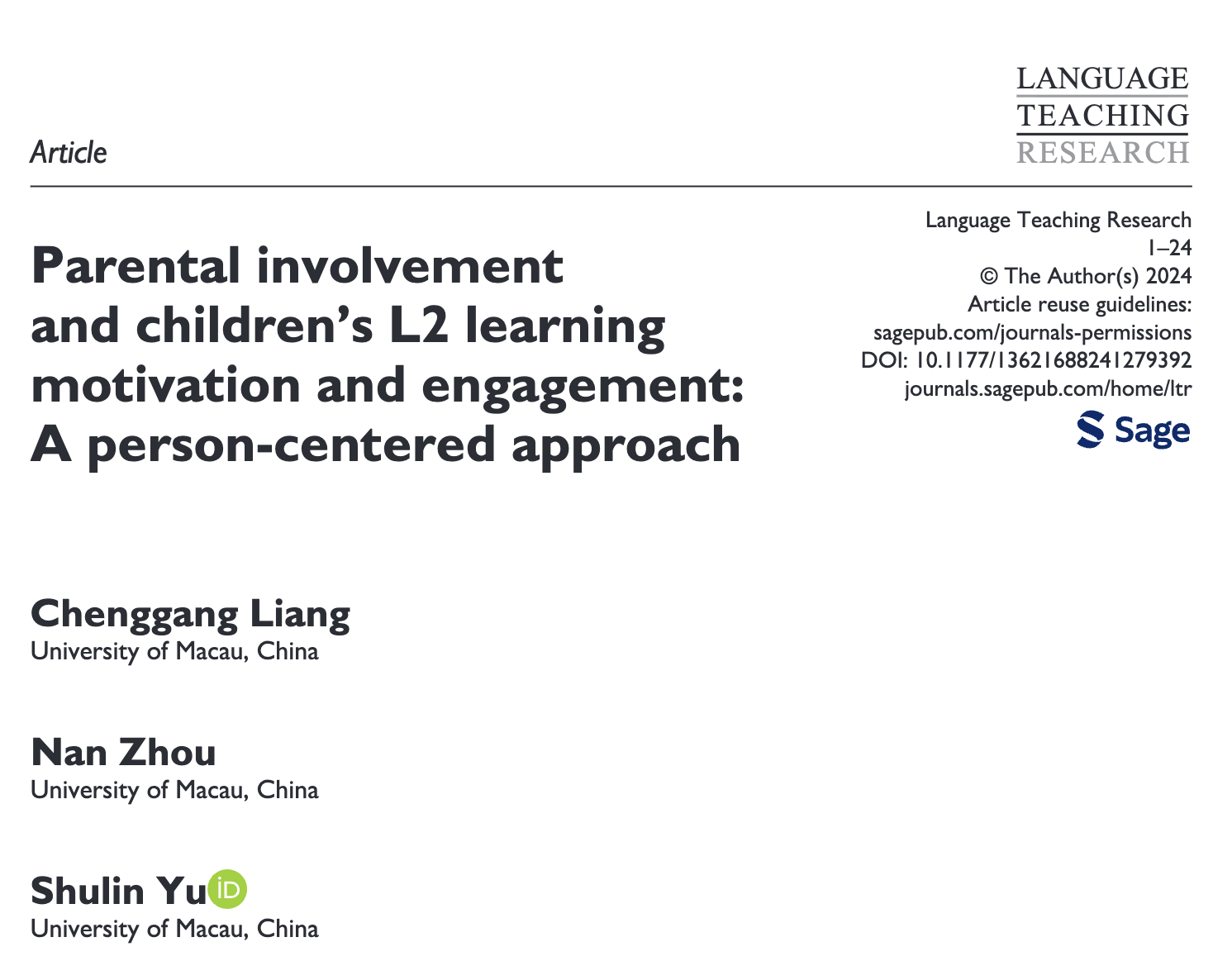
Liang, C., Zhou, N., & Yu, S.* (2024). Parental involvement and children’s L2 learning motivation and engagement: A person-centered approach. Language Teaching Research, 13621688241279392.

Research has consistently demonstrated that parental involvement plays a key role in children’s early second language (L2) development. However, little is known about how different aspects of parental involvement in children’s L2 learning are configured and how these differentiated combinations of parental involvement are associated with children’s L2 motivation and engagement. Moving beyond prior studies, which typically focused on the effects of single aspects of parental involvement, this study utilized a person-centered approach to examine the configuration patterns of various indicators of parental involvement in children’s L2 learning (i.e. parental autonomy support, psychological control, and behavioral control). Data were collected from a sample of 702 seventh graders (Mage = 13.09, SD = 1.64; 50.14% girls) in two major cities in China. Four distinct profiles (i.e. Authoritative, Neglectful, Control-centered, and Intrusive) were identified. Children’s L2 learning motivation and engagement varied across these profiles. These more nuanced findings shed light upon the heterogeneous nature of various parental involvement in children’s L2 learning and carry significant practical implications for both parents and practitioners aiming to foster a more supportive environment for children’s L2 learning.

By |2025-12-29T12:44:29+08:00December 29, 2025|research highlight|Comments Off on Liang, C., Zhou, N., & Yu, S.* (2024). Parental involvement and children’s L2 learning motivation and engagement: A person-centered approach. Language Teaching Research, 13621688241279392.

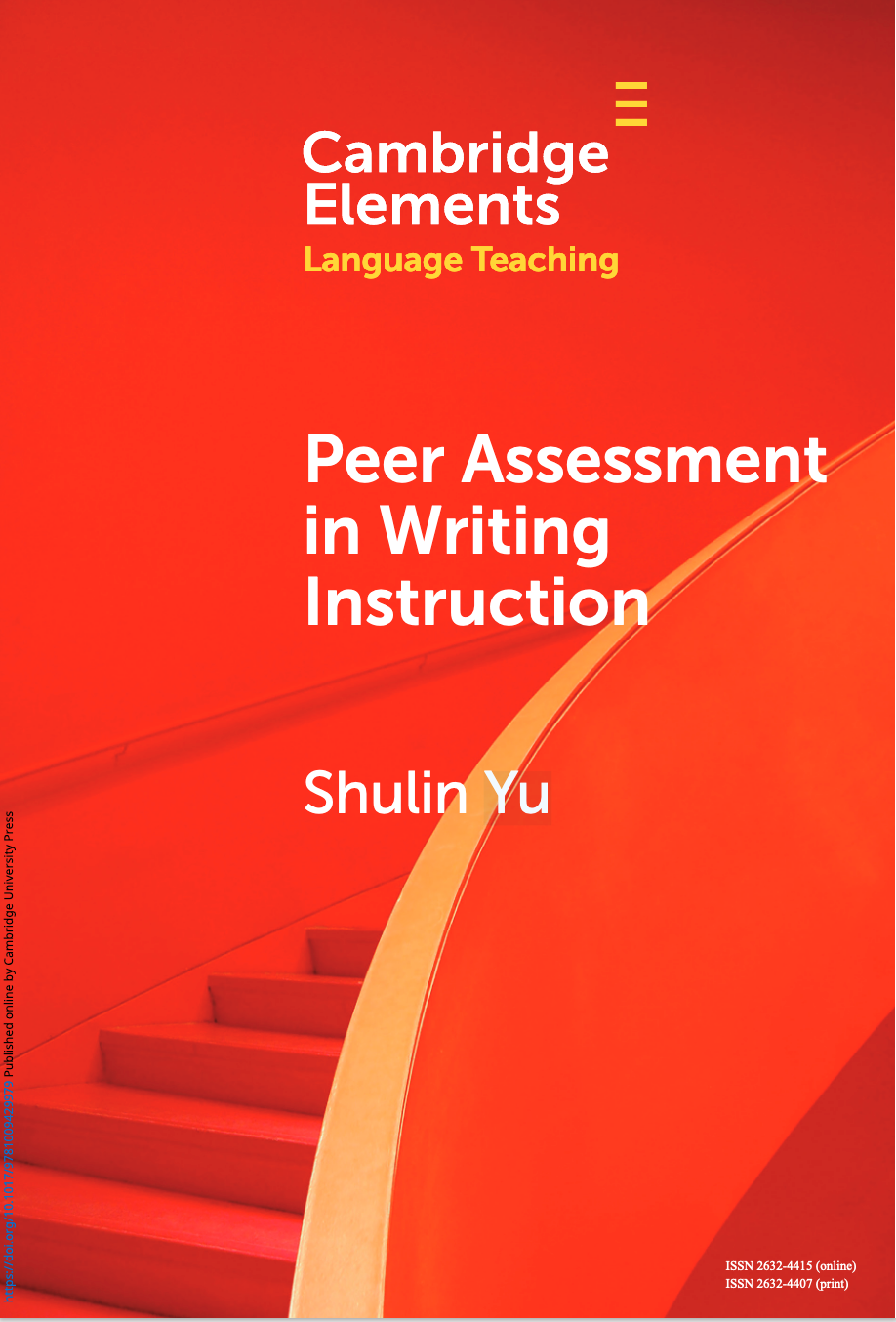
Yu, S. (2024). Peer Assessment in Writing Instruction. Cambridge University Press.

This Element traces the evolution of peer assessment in writing instruction and illustrates how peer assessment can be used to promote the teaching and learning of writing in various sociocultural and educational contexts. Specifically, this Element aims to present a critical discussion of the major themes and research findings in the existing studies on peer assessment regarding the three assessment paradigms (assessment of, for, and as learning), and to identify whether and how peer assessment has served the purposes of assessment of, for, and as learning, respectively in writing instruction. This Element highlights the contextual factors that shape the effect of peer assessment in writing instruction and concludes with directions for future research and implications regarding how peer assessment can be successfully used to improve students’ writing development.

By |2025-12-29T12:34:17+08:00December 29, 2025|research highlight|Comments Off on Yu, S. (2024). Peer Assessment in Writing Instruction. Cambridge University Press.

Yu, S., Zhang, E. D., & Liu, C. (2024). Research into practice: Digital multimodal composition in L2 writing. Language Teaching, 1-17.

Digital multimodal composing (DMC) has been valued as an engaging pedagogy in language teaching and learning in recent decades. Although research on DMC is flourishing and evidences its benefits for students’ development as second language (L2) users and writers, there are some missing links between research findings and classroom practices. In this article, we examine three kinds of relationships between research and practice with regard to DMC: areas in which research findings have not been well applied, areas in which research findings have been reasonably well applied, and areas in which research findings have been usefully applied. As recent research–practice frameworks in education research emphasize a collaborative relationship between researchers and practitioners, we argue that L2 writing researchers’ and teacher educators’ reflections and experiences are crucial to facilitate the dialogue between DMC research and practice in writing contexts. We suggest that DMC should be incorporated into L2 teacher education programs so that instructors are equipped with the necessary knowledge and competence to design, implement, and assess students’ DMC productions.

By |2025-12-29T12:40:23+08:00December 29, 2025|research highlight|Comments Off on Yu, S., Zhang, E. D., & Liu, C. (2024). Research into practice: Digital multimodal composition in L2 writing. Language Teaching, 1-17.

Hsiang, T. P., Graham, S., Lin, C., Wang, C., & Cao, Y. (2025). Teachers’ perceptions of their students’ digital citizenship and practices. Elementary School Journal, 126(1), 138-168.

Abstract

Because digital devices are central to everyday life, students need to become good digital citizens. In this study, 646 Grades 4–9 Chinese language arts teachers (85.2% were female), randomly selected from schools in Chongqing China, completed a survey about teaching digital citizenship and students’ digital citizenship capabilities. Four out of every five teachers taught digital citizenship, and they were slightly positive about students’ digital

citizenship capabilities. Teaching digital citizenship was predicted by preparation to teach these skills, teacher certification, teachers’ digital capabilities, time spent online at school, frequency of internet use at home, and perceived benefits of internet use. Teachers’ judgments of students’ digital citizenship capabilities were predicted by preparation to teach these skills, frequency of internet use at home, and perceived benefits of internet use.

Teachers’ judgments about students’ digital citizenship capabilities predicted students’ own assessments of these skills. Implications for practice and future research are presented.

Contributions of this paper

The study of teachers’ perceptions of their students’ digital citizenship is limited to a study conducted in the U.S., which found that middle school teachers did not believe their students had developed good digital citizenship practices (Martin et al., 2019). More research attention has been devoted to asking students to rate their digital citizenship capabilities. Students generally agree they follow the social norms of digital citizenship, but this is not the case for all students and for all aspects of this construct (e.g., cyberbullying, sharing passwords with others, befriending strangers, and using false information to register online). No study to date has examined the relationship between teachers’ and students’ perceptions of students’ digital citizenship.

The present investigation expands on the Martin et al. (2019) study in six important ways. This is the only prior study examining teachers’ perceptions of students’ digital citizenship capabilities. First, the Grades 4 to 9 Chinese language arts teachers in this study were randomly selected from all of the public and private schools in the Chongqing municipality in China (Martin et al involved a convenience sample). Second, we asked teachers to assess their students’ capabilities by applying two additional aspects of digital citizenship: balanced media use and media literacy. Third, we established the factor structure and reliability of the various measures applied in this study. Martin et al. (2019) did not examine the psychometric properties of their instruments. Fourth, we applied a more expansive set of predictors to examine factors that accounted for the variance in teachers’ judgments about their students’ digital citizenship capabilities. This included teachers’ preparation to teach digital citizenship, how frequently teachers used digital devices for learning and recreation, and their beliefs about the benefits of online engagement. Fifth, we also examined factors that predicted reported teaching of digital citizenship by teachers (this was not done in Martin et al., 2019). This included the four constructs used to predict teachers’ beliefs about their students’ digital citizenship capabilities identified above as well as time spent online at school, teachers’ perceptions of their capabilities to use digital tools, and teacher certification.

The sixth way in which this study differed from Martin et al. (2019) is that we examined if teachers’ perceptions of students’ digital capabilities predicted students’ assessments of their own capabilities. We were unable to locate any study that had examined this issue previously. If teachers’ estimates are a strong predictor of students’ estimates of their digital citizenship capabilities, then this provides some empirical support for the use of teachers’ judgments as a means for determining what should be taught.

The present study found that most of the participating teachers taught digital citizenship to their students, and both teachers and students were positive about students’ digital citizenship capabilities. However, teachers’ judgements of students’ capabilities were not a strong predictor of students’ own estimates. Based on both teacher and students’ judgements, there is room for students to develop even stronger digital citizenship skills. Further, if teachers’ judgements are to serve formative assessment purposes, they need to be supplemented by other forms of evidence because the accuracy of teachers’ judgments of students’ digital citizenship skills are unknown.

Findings from this study are important because students need to learn how to act online in safe, responsible, healthy, and ethical ways. With the advent of artificial intelligence (AI), this has become even more critical. We think the concept of digital citizenship needs to be expanded to include AI (Hsiang et al., in press), and both parents, children, and teachers will need guidance on the kinds of socially desirable behaviors that children need to acquire in an AI world. 


Journal

Elementary School Journal

The University of Chicago

ISSN: 0013-5984

E-ISSN: 1554-8279

5-year Journal Impact Factor: 1.5

2024 JCR Impact Factor*: 1.4

Ranked #326 out of 756 “Education & Educational Research” journals [Q2]

The Elementary School Journal has served researchers, teacher educators, and practitioners in the elementary and middle school education for more than one hundred years. ESJ publishes peer-reviewed articles that pertain to both education theory and research and their implications for teaching practice. In addition, ESJ presents articles that relate the latest research in child development, cognitive psychology, and sociology to school learning and teaching.

First published in 1900 as The Course of Study, the title was changed to The Elementary School Teacher and Course of Study in 1901. The title was changed to The Elementary School Teacher in 1902, and to The Elementary School Journal in 1914.

Link

https://doi.org/10.1086/736603

AERA i-Presentation Gallery: https://aera25-aera.ipostersessions.com/?s=2B-E7-94-D6-CF-4C-1A-00-B4-FC-06-E2-34-3B-84-CC 

By |2025-12-29T12:42:17+08:00December 29, 2025|research highlight|Comments Off on Hsiang, T. P., Graham, S., Lin, C., Wang, C., & Cao, Y. (2025). Teachers’ perceptions of their students’ digital citizenship and practices. Elementary School Journal, 126(1), 138-168.

Sun, M., Chan, S., Ke, S., Zhu, X., & Yao, Y. (2025). Enhancing Chinese reading in ethnic minority kindergarteners in Hong Kong: A bioecological approach to shared book reading interventions. Reading in a Foreign Language, 37(2), 172-198.

Abstract:

Shared book reading is necessary for learning Chinese as a second language (L2), but its effectiveness requires further empirical exploration and support. Scholars emphasise considering parental and child characteristics alongside school-based interventions. Guided by the bioecological framework, this study included three groups: an experimental group of ethnic minority kindergarteners in Hong Kong and two control groups of L2 and first language (L1) Chinese children. A sixteen-week shared book intervention was implemented. ANOVA and MANCOVA analyses of data from 161 children and 35 parents showed significant gains in metalinguistic awareness and word and text reading among the experimental group. The structured intervention was particularly effective in enhancing metalinguistic awareness, enabling L2 children to perform similarly to L1 children in post-tests. Additionally, fathers’ oral proficiency in Chinese and children’s use of ethnic languages positively impacted word and text reading. This study enriches the bioecological framework and offers insights for promoting L2 Chinese reading.


This study offers new empirical evidence on the effectiveness of shared book reading interventions for L2 Chinese learners in Hong Kong, enriching the bioecological framework by illustrating the joint influence of home and school contexts on language development. It also highlights the role of individual and parental factors—such as fathers’ oral Chinese proficiency and children’s use of ethnic languages—in moderating reading outcomes and extends existing research by examining literacy gains across sub-lexical, lexical, and super-lexical levels.


A brief introduction of the journal:

Reading in a Foreign Language is a peer-reviewed international journal dedicated to the theory and practice of reading instruction and reading development in foreign or second language contexts. It is ranked as a Q1 journal in the Scopus database, according to the SCImago Journal Rank (SJR) indicator.

Journal link: https://nflrc.hawaii.edu/rfl/

Paper link: https://hdl.handle.net/10125/67503

By |2025-12-29T12:10:33+08:00December 29, 2025|research highlight|Comments Off on Sun, M., Chan, S., Ke, S., Zhu, X., & Yao, Y. (2025). Enhancing Chinese reading in ethnic minority kindergarteners in Hong Kong: A bioecological approach to shared book reading interventions. Reading in a Foreign Language, 37(2), 172-198.

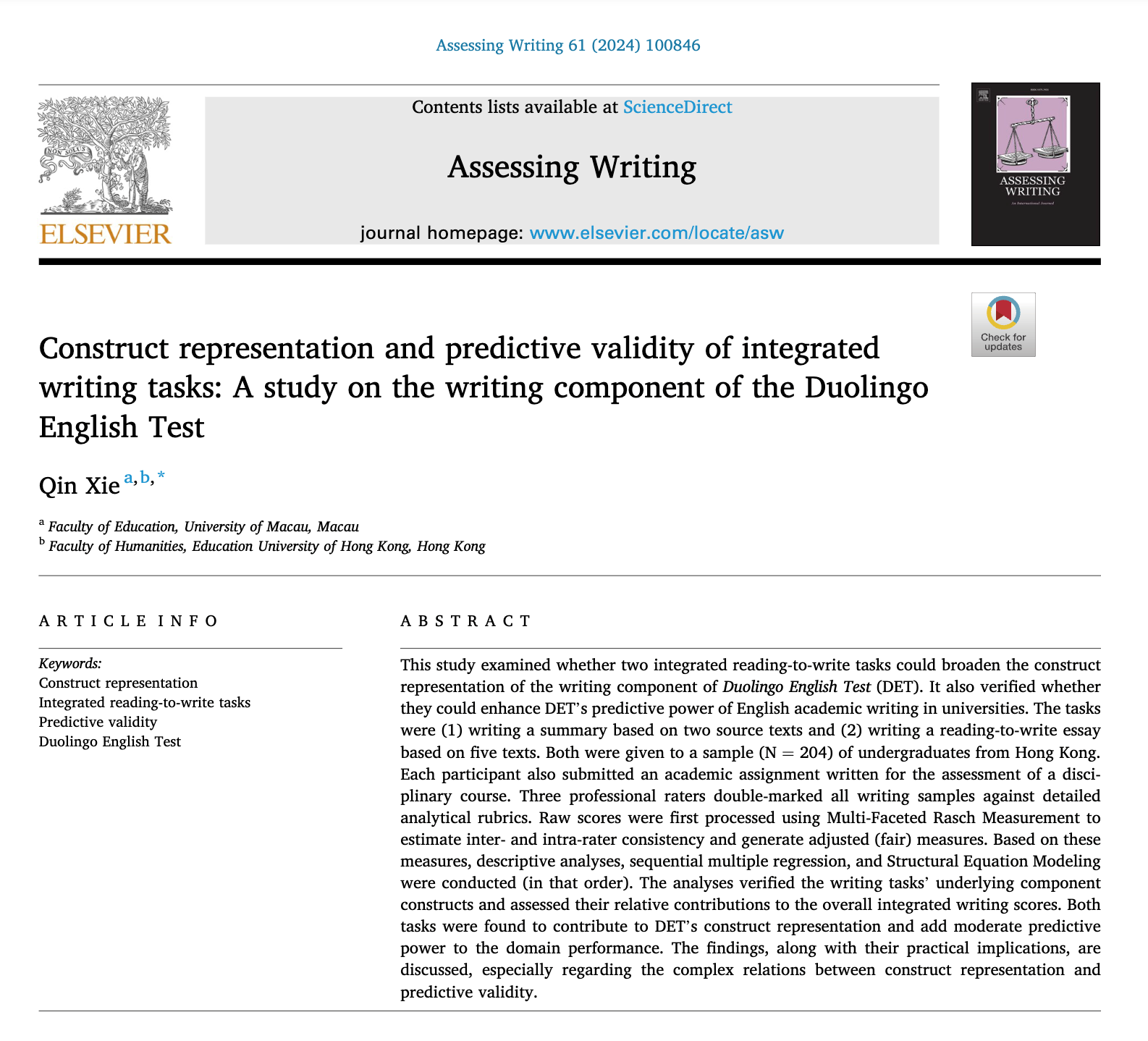
Xie, Q. (2024). Construct representation and predictive validity of integrated writing tasks: A study on the writing component of the Duolingo English Test. Assessing Writing, 61, 100846.

Abstract

This study examined whether two integrated reading-to-write tasks could broaden the construct representation of the writing component of Duolingo English Test (DET). It also verified whether they could enhance DET’s predictive power of English academic writing in universities. The tasks were (1) writing a summary based on two source texts and (2) writing a reading-to-write essay based on five texts. Both were given to a sample (N = 204) of undergraduates from Hong Kong. Each participant also submitted an academic assignment written for the assessment of a disciplinary course. Three professional raters double-marked all writing samples against detailed analytical rubrics. Raw scores were first processed using Multi-Faceted Rasch Measurement to estimate inter- and intra-rater consistency and generate adjusted (fair) measures. Based on these measures, descriptive analyses, sequential multiple regression, and Structural Equation Modeling were conducted (in that order). The analyses verified the writing tasks’ underlying component constructs and assessed their relative contributions to the overall integrated writing scores. Both tasks were found to contribute to DET’s construct representation and add moderate predictive power to the domain performance. The findings, along with their practical implications, are discussed, especially regarding the complex relations between construct representation and predictive validity.

By |2025-12-29T12:07:39+08:00December 29, 2025|research highlight|Comments Off on Xie, Q. (2024). Construct representation and predictive validity of integrated writing tasks: A study on the writing component of the Duolingo English Test. Assessing Writing, 61, 100846.

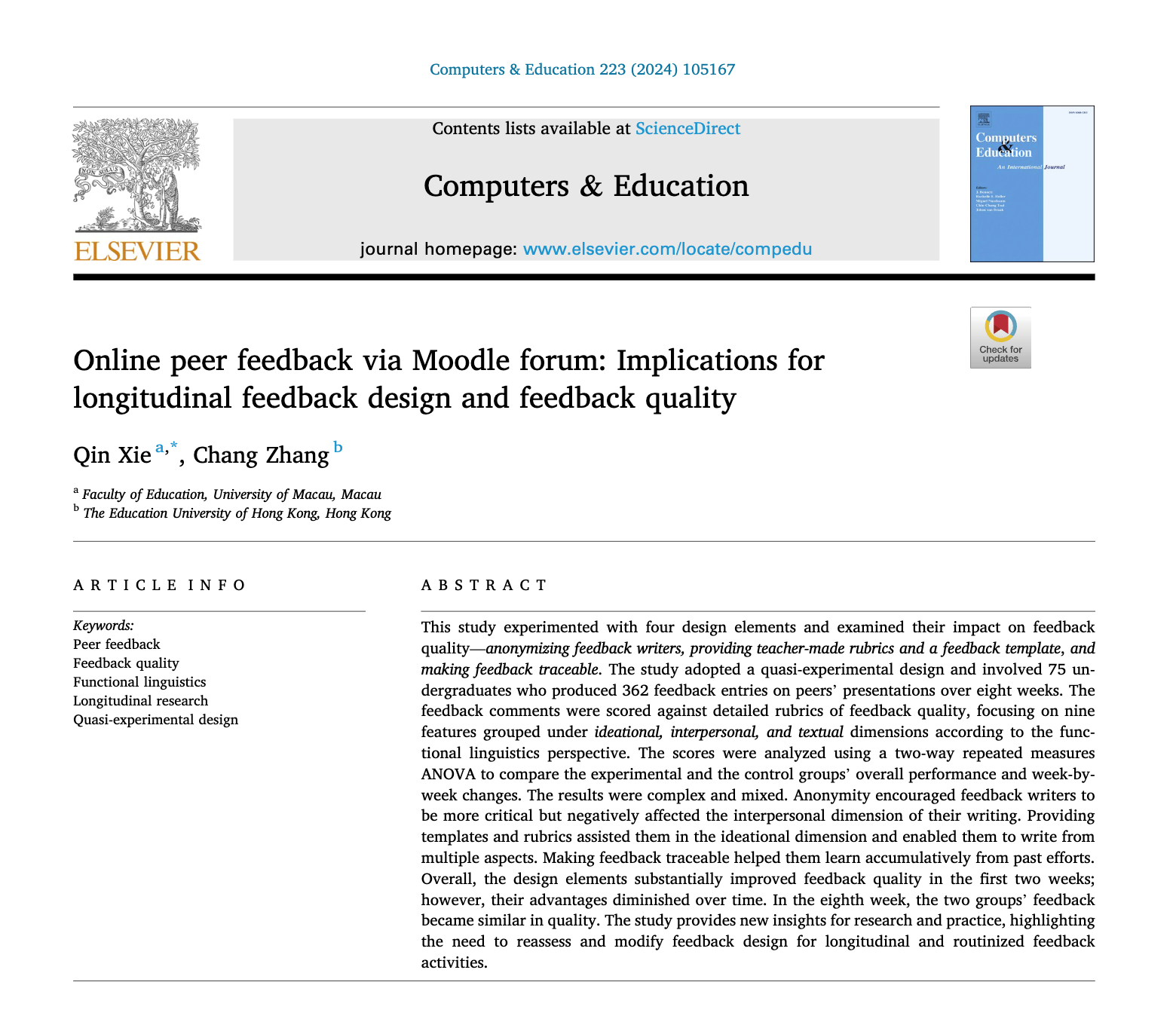
Xie, Q. & Zhang, C. (2024). Online peer feedback via Moodle forum: Implications for longitudinal feedback design and feedback quality. Computers & Education, 223 (2024) 105167.

Abstract

This study experimented with four design elements and examined their impact on feedback quality—anonymizing feedback writers, providing teacher-made rubrics and a feedback template, and making feedback traceable. The study adopted a quasi-experimental design and involved 75 undergraduates who produced 362 feedback entries on peers’ presentations over eight weeks. The feedback comments were scored against detailed rubrics of feedback quality, focusing on nine features grouped under ideational, interpersonal, and textual dimensions according to the functional linguistics perspective. The scores were analyzed using a two-way repeated measures ANOVA to compare the experimental and the control groups’ overall performance and week-by week changes. The results were complex and mixed. Anonymity encouraged feedback writers to be more critical but negatively affected the interpersonal dimension of their writing. Providing templates and rubrics assisted them in the ideational dimension and enabled them to write from multiple aspects. Making feedback traceable helped them learn accumulatively from past efforts. Overall, the design elements substantially improved feedback quality in the first two weeks; however, their advantages diminished over time. In the eighth week, the two groups’ feedback became similar in quality. The study provides new insights for research and practice, highlighting the need to reassess and modify feedback design for longitudinal and routinized feedback activities.

By |2025-12-29T12:05:40+08:00December 29, 2025|research highlight|Comments Off on Xie, Q. & Zhang, C. (2024). Online peer feedback via Moodle forum: Implications for longitudinal feedback design and feedback quality. Computers & Education, 223 (2024) 105167.

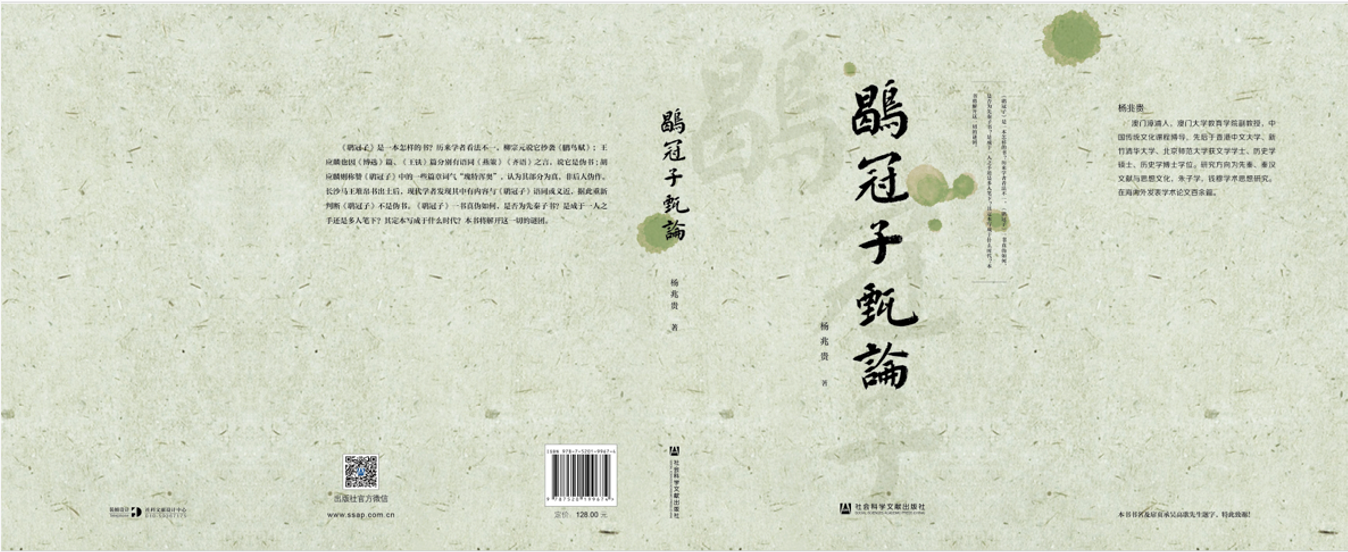
Yang Z. (2023). HeGuanZi Zhen Lun, Beijing: Social Science Academic Press.《鶡冠子甄論》,社會科學文獻出版社,2023年

一、書本內容簡介

    《鶡冠子》是一本怎樣的書?歷來學者看法不一。唐代柳宗元說它抄襲漢代賈誼《鵩鳥賦》,宋代王應麟也因《博選》篇、《王鈇》篇分別用《戰國策‧燕策》與《國語‧齊語》之言,說它是偽書。明代胡應麟則說它的部分篇章詞氣“瑰特渾奧”,說它的部分內容是真的。現代學者發現長沙馬土堆帛書有十幾句和《鶡冠子》相同或相近,斷言《鶡冠子》不是偽書。《鶡冠子》一書是真是假?是否先秦子書?是否成於一人之手?還是成於眾手?寫成於什麼時代?本書解開這一切的謎團。

本書採取文本分析法、二重考證法,客觀反映《鶡冠子》的真實、歷史地位,分上下兩編:

上編分章研究,從思想主體、學派歸屬、成篇年代三方面就《鶡冠子》的十一篇逐篇論證,結論是:《鶡冠子》的成書年代,上自戰國晚期,下迄漢武初年,前後歷逾百年,此非一人一時著作。又,依學派來分,《鶡冠子》不是學者所說的道家作品,而是由不同學派組成:有儒家著作,如《道端》篇;有兵家著作,如《武靈王》篇;有數量最多的黃老學著作,如《天則》篇;有反映鶡冠子兵家思想,如《近迭》篇。

下編綜合研究,從幾方面著手:

一是討論鶡冠子與《鶡冠子》的關係,鶡冠子的思想與楚、趙、秦、齊四國思想文化有一定的關係。二是分析《鶡冠子》的形上學與其在先秦漢初道家思想史的地位。三是分析《鶡冠子》的理想政治論,主要分析五正說和成鳩氏之治。這兩種理想政治都使天下一統,四夷賓服。這兩種理想政治論在先秦思想史上有鮮明獨特的地位。

二、本書的學術貢獻與創作點:

  1. 《鶡冠子》不是偽書,否定傳統《鶡冠子》是偽書之說。
  2. 《鶡冠子》不是鶡冠子一人所寫,修正傳統學者的看法。
  3. 《鶡冠子》一書有儒家、道家、兵家、陰陽家等不同作品,修正傳統認為《鶡冠子》一書是道家作品的看法。
  4. 《鶡冠子》不全是編寫於戰國時期。就成篇時代言,除大部分篇章寫成於戰國時期外,另有寫於秦代的,也有寫成於漢武帝時期。
  5. 本書一些研究發前人所未發,如探討先秦漢代帝道、王道、霸道、五至論思想的發展,鶡冠子的理想政治論(五正說和成鳩氏之治),“太一”、“氣”等觀念的演變。另,本書研究指出,道家作品《泰錄》篇提出禪讓說,這打破學界認為儒、墨兩家才提出禪讓的成說。

6.本書填補戰國、漢初思想史一些空白。

社會科學文獻出版社是直屬於中國社會科學院的人文社會科學專業學術出版社,是中國國家級、一類出版社。

By |2025-12-29T12:03:30+08:00December 29, 2025|research highlight|Comments Off on Yang Z. (2023). HeGuanZi Zhen Lun, Beijing: Social Science Academic Press.《鶡冠子甄論》,社會科學文獻出版社,2023年
Go to Top